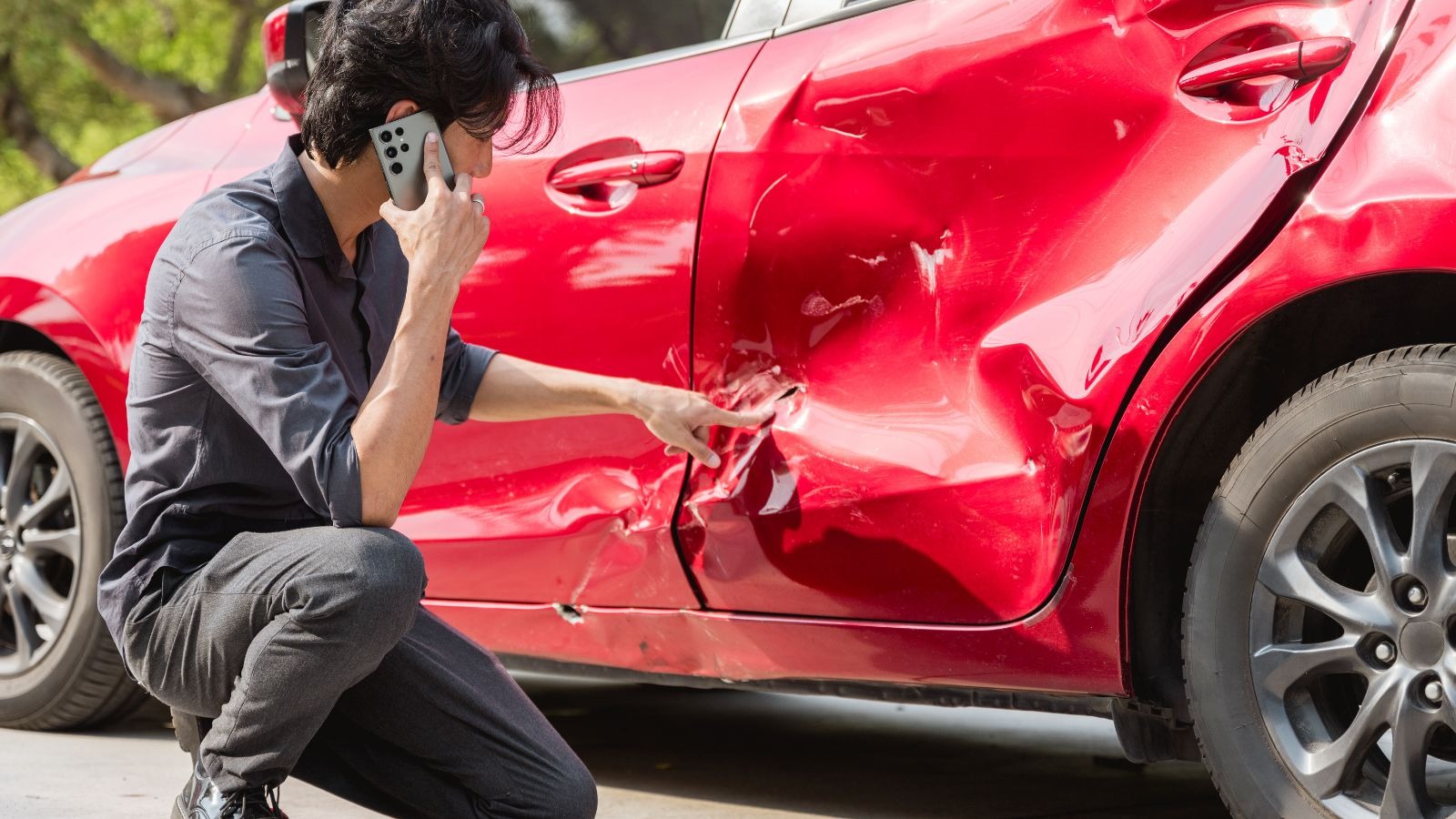
T-bone crashes, in which one vehicle strikes another at a roughly perpendicular angle, are among the most lethal collision configurations in modern traffic safety statistics. The asymmetry between frontal impact protection and lateral impact protection in most production vehicles is the mechanical reason: vehicle safety engineering has invested decades of development in crumple zones, airbags, and energy-absorbing front structures, while the door and B-pillar construction that separates the occupant from a laterally striking vehicle offers significantly less protection against the same crash forces. The occupant in the struck vehicle is separated from the striking vehicle by the thickness of a car door. The forces that arrive through that door at highway speeds produce injury patterns, including traumatic brain injuries, thoracic injuries, pelvic and hip fractures, and cervical spine trauma, that are systematically more severe than the injuries produced by frontal crashes at comparable speeds.
The Physics of Lateral Impact and Its Injury Consequences
In a T-bone crash, the striking vehicle’s kinetic energy transfers directly into the door structure of the struck vehicle and through it into the occupant’s body with very limited energy absorption intervening. The occupant’s head, which is not supported laterally by a headrest in the way it is supported posteriorly, undergoes the abrupt lateral acceleration that produces traumatic brain injury even in crashes that appear relatively minor from outside the vehicle. The pelvis and hip, which are at approximately door-sill height in most vehicles, receive direct loading from door intrusion that produces acetabular fractures, femoral neck fractures, and hip dislocations that require surgical intervention and long recovery periods. For occupants on the struck side of the vehicle, the door structure’s intrusion into the occupant space is often the primary injury mechanism rather than the overall crash forces.
Establishing Liability When Both Drivers Claim the Green Light
The most common liability dispute in T-bone crashes is the disputed signal: each driver claims the light in their favor gave them the right of way, and without objective evidence, the case becomes a credibility contest that adjusters typically resolve by attributing fault to both drivers. Objective evidence breaks this dispute in ways that neither driver’s account can overcome:
- Traffic signal timing data: Most modern traffic signals are controlled by systems that record cycle timing, and some record individual phase changes. A traffic signal engineer who accesses the timing data from the specific intersection at the time of the crash can establish with precision what phase each direction was in and how long it had been in that phase when the crash occurred
- Event data recorder data from both vehicles: The EDR in each vehicle records pre-crash speed and braking. A driver who was decelerating before the intersection was responding to the yellow or red signal. A driver who was traveling at constant speed or accelerating was treating the signal as green or was not monitoring it
- Traffic and surveillance camera footage: Intersection cameras, red-light cameras, and business surveillance from properties near the intersection capture the signal state and the vehicles’ approach in ways that neither driver’s account can contradict
- Witness accounts: Pedestrians waiting at the intersection crosswalk, who had their own pedestrian signal phase to observe, are often the most credible available witnesses because their pedestrian signal timing directly corresponds to the vehicle signal phase
The National Highway Traffic Safety Administration’s intersection crash research documents the injury patterns and contributing factors for angle crashes at signalized intersections. An experienced T-bone car accident lawyer secures the traffic signal timing data, EDR records, and camera footage before they are overwritten or become unavailable through normal retention cycles.