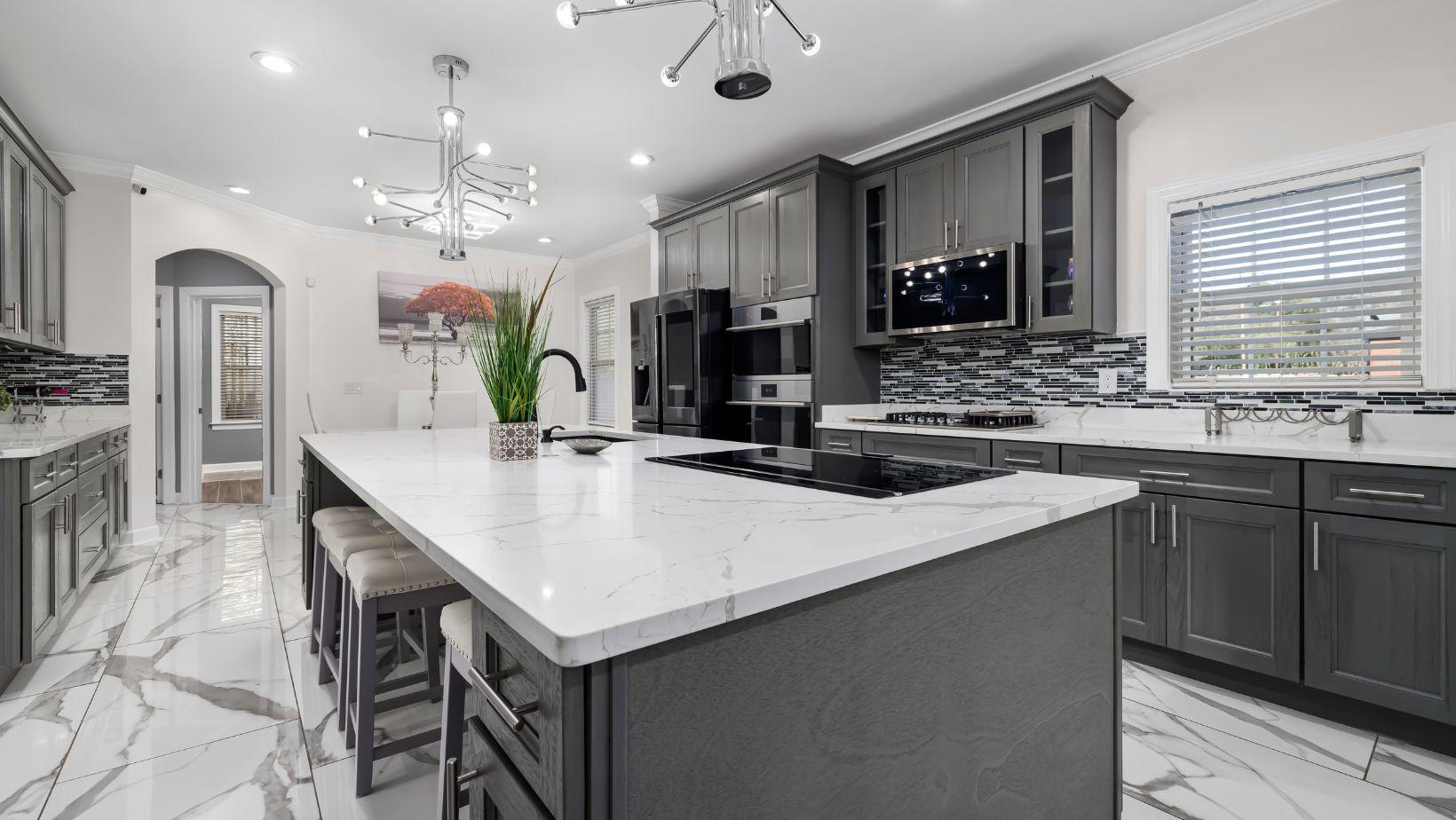
Kitchen renovations consistently yield one of the highest returns on investment for residential real estate, often recouping 60% to 80% of their costs upon resale. Beyond the financial returns, the kitchen remains the operational center of daily life. Modern home improvement is no longer just about selecting attractive backsplash tiles or painting cabinets. Today’s high-performance kitchen upgrades require a careful balance of spatial ergonomics, energy efficiency, and functional utility.
Whether you are executing a full gut renovation or updating key fixtures to improve daily workflow, success lies in the details. Integrating smart storage, optimizing workflow triangles, and upgrading core appliances transforms a purely functional cooking area into an efficient, living space tailored to modern lifestyles.
1. Ergonomics and the Evolution of the Kitchen Triangle
For decades, the standard for kitchen architecture was the classic “work triangle”—the spatial connection between the sink, cooktop, and refrigerator. While the fundamental mechanics of this layout remain valid, modern kitchen design expands on this concept by introducing specialized work zones.
Designing for Functional Prep Zones
Instead of focusing solely on the distance between three main points, modern homeowners design around task-oriented stations:
- The Prep Zone: Requires at least 36 inches of continuous, uninterrupted countertop space adjacent to a water source and trash receptacles.
- The Cooking Zone: Demands heat-resistant surfaces and immediate proximity to essential cookware, spices, and ventilation systems.
- The Storage and Preservation Zone: Requires spatial planning for pantry goods and primary cooling appliances, ensuring easy access for unloading groceries without disrupting meal prep.
When planning your kitchen layout, ensure traffic paths through the workspace measure at least 42 inches wide for single-cook spaces, or 48 inches for multi-cook environments. This prevents bottlenecks and ensures cabinet doors and appliance handles can open fully without obstruction.
2. Choosing Core Appliances for Long-Term Value
Major appliances represent a substantial portion of any kitchen improvement budget. Selecting the right models requires balancing initial hardware costs against long-term operational efficiency, maintenance needs, and design cohesion.
Cold Storage and Preservation Technology
Refrigeration is the only appliance in the home running continuously, making performance and energy efficiency paramount. When evaluating cold storage upgrades, homeowners must consider both installation style and internal airflow systems:
- Freestanding vs. Built-In: Freestanding units offer maximum flexibility and lower upfront costs, whereas built-in models sit flush with cabinetry for a custom, integrated aesthetic.
- Dual-Evaporator Systems: Advanced cooling setups maintain separate humidity levels for the fresh food and freezer compartments. This prevents fresh produce from drying out and stops freezer burn.
- Smart Compressor Variable Speeding: Inverters continuously adjust cooling output based on internal load and door open frequencies, reducing energy draw significantly over time.
Selecting the correct appliance profile is critical to preventing spatial layout issues during installation. To explore current configurations, dimensions, and cooling capabilities for your layout, you can shop fridges online to compare capacity options and energy ratings prior to finalizing cabinet dimensions.
Cooking and Ventilation Precision
Induction cooking technology continues to gain market share over conventional gas setups due to its safety profile, rapid thermal response, and superior energy transfer efficiency (transferring roughly 90% of electromagnetic energy directly to cookware compared to 40% efficiency in gas flame cooking). Pair high-output cooking surfaces with an appropriately sized range hood capable of moving sufficient Air Volume (measured in CFM) to protect indoor air quality from aerosolized grease and combustion byproducts.
3. High-Impact Structural and Surface Upgrades
Cabinetry and countertops set the visual tone of the kitchen while bearing the brunt of daily mechanical wear. Selecting materials that withstand moisture, thermal shock, and heavy usage ensures your investment remains pristine over time.
Countertop Selection Criteria
- Engineered Quartz: Non-porous, highly stain-resistant, and requires zero periodic sealing. Ideal for high-traffic family kitchens.
- Granite & Natural Stone: Offers unique aesthetic variations and high heat tolerance, though requires routine sealing to prevent moisture penetration.
- Porcelain Slabs: Gaining rapid popularity due to UV resistance, non-porous nature, and ability to handle direct contact with hot pans without thermal cracking.
Strategic Storage Hardware
Custom cabinetry can quickly balloon a renovation budget. However, you can achieve semi-custom functionality with stock or modular units by incorporating heavy-duty pull-out hardware:
- Full-extension, soft-close drawer glides rated for 100+ lbs.
- Corner cabinet organizers (such as blind-corner pull-outs) to eliminate dead spatial volume.
- Integrated vertical dividers for baking sheets, cutting boards, and oversized cookware.
4. Lighting Engineering and Infrastructure Preparation
Even the finest materials will feel flat without a layered lighting plan. A comprehensive kitchen renovation requires three distinct light layers:
- Task Lighting: High-CRI (Color Rendering Index) under-cabinet LED strips aimed directly at prep surfaces to eliminate shadows cast by overhead fixtures.
- Ambient Lighting: Recessed LED downlights evenly spaced throughout circulation paths to provide overall room brightness.
- Accent/Decorative Lighting: Pendant fixtures positioned over islands or dining nooks to introduce texture, scale, and visual anchor points.
Electrical and Plumbing Provisions
Before drywall is installed, evaluate your home’s electrical panel capacity. Modern kitchens featuring high-wattage induction cooktops, dual ovens, and dedicated refrigeration circuits often require upgrading service to 200 amps. Similarly, ensure rough-in plumbing includes dedicated shut-off valves for ice makers, secondary prep sinks, and instant hot water dispensers.
Building a Sustainable, Future-Proof Kitchen
A successful kitchen upgrade is not defined merely by current design trends, but by how well the space functions over years of daily use. By prioritizing ergonomic layouts, durable surface materials, and high-efficiency core appliances, homeowners can build a space that enhances quality of life while protecting resale value.
Take the time to evaluate spatial constraints, map out storage needs early in the planning phase, and source reliable fixtures. Strategic preparation ensures your kitchen renovation delivers lasting comfort, utility, and financial return for years to come.