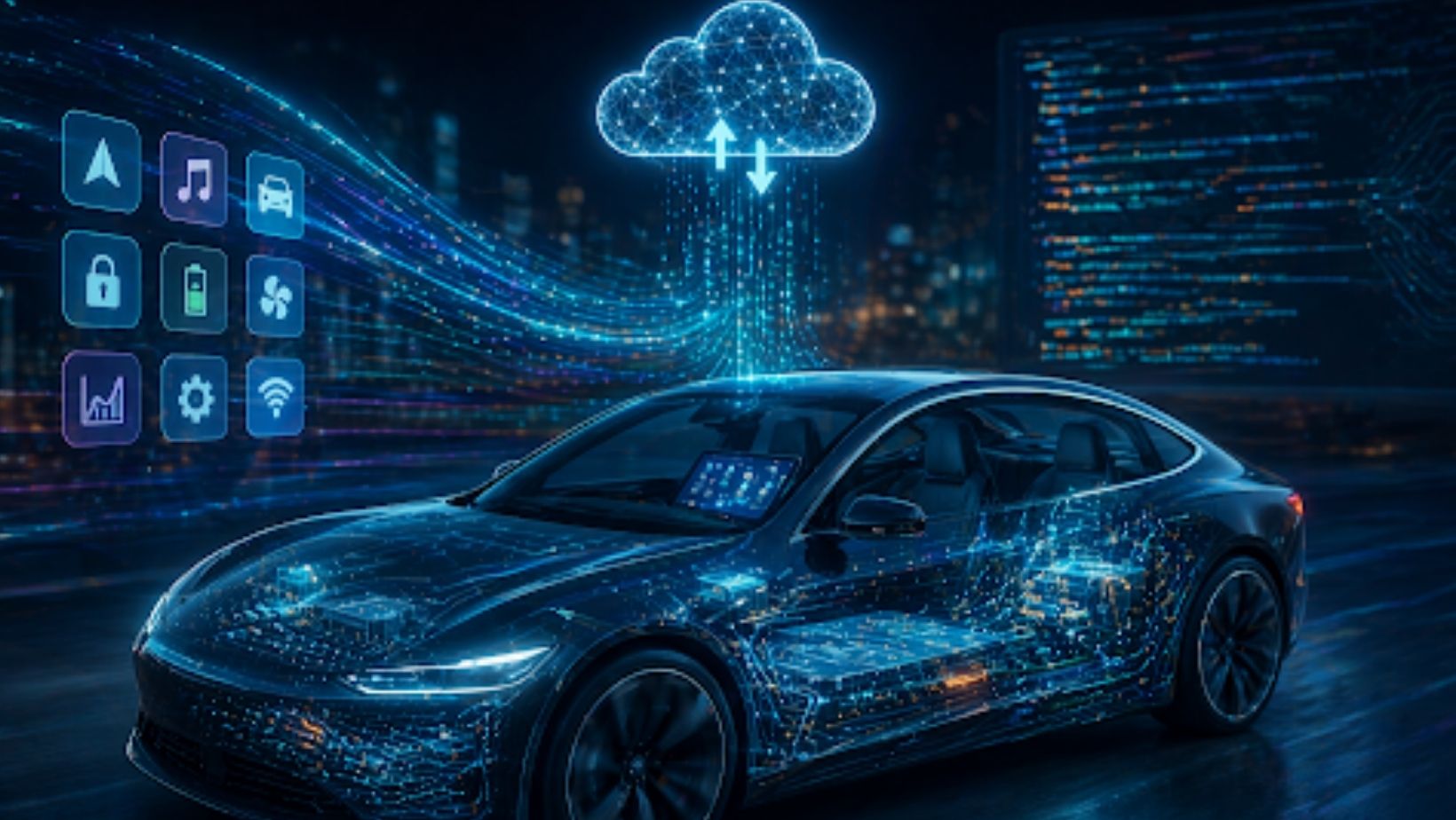
For most of automotive history, a car was understood as a mechanical system first and foremost. Engines, gearboxes, suspension geometry, and physical durability defined performance. Software existed, but mostly in the background—limited to basic engine management or infotainment functions.
That distinction is now dissolving. Modern vehicles are increasingly defined not by hardware alone, but by software. Updates are delivered over the air, features can be unlocked remotely, and driving behaviour is increasingly shaped by code rather than purely mechanical design.
The result is a shift that goes beyond engineering. It is changing how cars are built, how they are owned, and even how they evolve over time.
From Machine to Platform
The most significant change in the automotive industry is conceptual: cars are no longer static products. They are becoming platforms.
In the traditional model, a vehicle left the factory in a fixed state. Any improvements required physical intervention—recalls, servicing, or aftermarket modifications. Today, many new vehicles function more like smartphones on wheels, with operating systems that can be updated continuously.
These updates can adjust everything from battery management and acceleration response to infotainment layouts and driver assistance features. In some cases, manufacturers can even introduce entirely new functions after purchase.
This fundamentally alters the lifecycle of a car. Ownership is no longer just about maintaining a machine; it is about managing an evolving software environment.
The Rise of the Digital Control Layer
At the core of software-defined vehicles is the digital control layer: a central computing system that integrates data from across the car and coordinates its behaviour.
Instead of isolated mechanical systems operating independently, modern vehicles rely on interconnected modules governed by software logic. Sensors feed data into processors, which then adjust performance in real time.
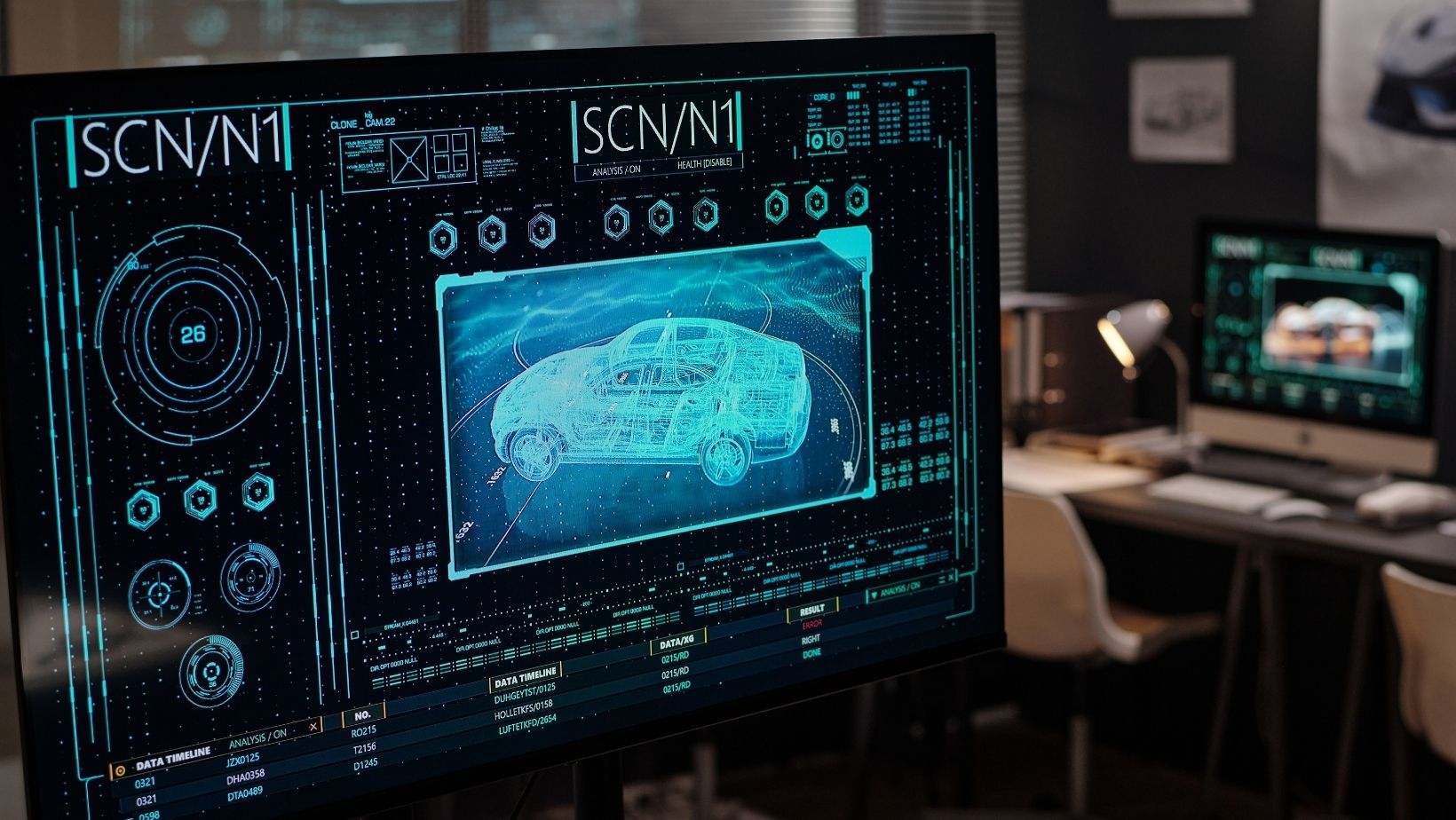
This architecture allows for far greater precision and adaptability. Traction control, braking systems, steering assistance, and energy distribution can all be dynamically adjusted based on driving conditions.
It also introduces a new level of abstraction between driver and machine. The experience of driving is increasingly shaped by algorithms that interpret intent and environmental context.
Continuous Improvement Through Updates
One of the most visible changes brought by software-defined vehicles is the concept of continuous improvement.
Traditionally, a car depreciated in both value and capability from the moment it left the showroom. Today, vehicles can improve after purchase. Performance tweaks, efficiency gains, and interface redesigns can be deployed remotely.
This creates a living product model. A car purchased today may not remain identical to itself a year later. Its behaviour, responsiveness, and feature set can evolve in ways that were previously impossible without physical modification.
For manufacturers, this also opens new commercial models—subscription features, optional upgrades, and modular functionality delivered through software licensing.
Cars as Connected Ecosystems
Modern vehicles are no longer isolated units. They are connected nodes within broader digital ecosystems.
Integration with smartphones, home devices, navigation networks, and cloud services means that the car is now part of a wider data environment. Routes can be pre-planned based on calendar events, charging can be optimised based on energy pricing, and diagnostics can be monitored remotely.
This connectivity also changes expectations. Drivers increasingly assume that their vehicles will behave like other digital devices: responsive, updateable, and integrated into daily digital life.
The boundary between driving and computing is becoming less distinct.
What Happens to Driving Experience?
As software takes a more central role, a key question emerges: what happens to the driving experience itself?
On one hand, digital systems can enhance safety and efficiency. Adaptive cruise control, lane assistance, and predictive braking all reduce cognitive load and improve consistency.
On the other hand, there is an ongoing debate about the loss of mechanical transparency. As systems become more automated and mediated by software, the direct relationship between driver input and vehicle response becomes less immediate.
This shift does not necessarily remove engagement, but it changes its nature. Driving becomes less about mechanical mastery and more about system awareness—understanding how software interprets and executes decisions.
Personalisation in a Software-Driven World
One of the more subtle consequences of software-defined vehicles is the expansion of personalisation.
Seat positions, driving modes, infotainment layouts, lighting preferences, and even performance characteristics can now be stored as user profiles. A single vehicle can effectively behave like multiple different cars depending on who is driving.
This reflects a broader cultural trend in automotive design: identity is increasingly expressed through configuration rather than physical modification alone.
In parallel, external customisation still plays a role in how drivers express individuality. Elements such as styling choices or registration presentation remain part of the broader ecosystem of vehicle identity. In this space, companies like Number 1 Plates operate within the practical side of vehicle presentation, where owners continue to value subtle, personalised touches alongside digital customisation.
The distinction between software identity and physical identity is becoming more layered rather than mutually exclusive.
The Automotive Industry Becomes a Tech Industry
Perhaps the most profound shift is organisational rather than mechanical. Car manufacturers are increasingly behaving like technology companies.
Software teams now sit alongside traditional engineering departments. Release cycles resemble those of consumer electronics. Cybersecurity, data infrastructure, and cloud architecture are now as important as engine design once was.
This convergence has introduced new challenges. Reliability is no longer just about physical durability but also software stability. A bug in code can affect braking behaviour or infotainment systems just as significantly as a mechanical fault.
As a result, automotive design has become a hybrid discipline—part engineering, part software development, part data science.
Regulation, Ethics, and Control
With increased software control comes increased responsibility. Regulators are now faced with questions that did not exist in traditional automotive frameworks.
Who is accountable when software alters vehicle behaviour post-purchase? How should updates be governed? What level of transparency should drivers have over automated systems?
These questions are still evolving, and different regions are approaching them at different speeds. What is clear, however, is that software-defined vehicles require a new regulatory mindset—one that accounts for continuous change rather than fixed specifications.
Conclusion: A Redefinition of What a Car Is
The shift toward software-defined vehicles represents more than a technological upgrade. It is a structural change in how mobility is conceived.
Cars are no longer static machines defined at the point of manufacture. They are evolving systems shaped by code, connectivity, and ongoing updates. This transforms not only how they function, but how they are experienced, maintained, and understood.
As this transition continues, the line between vehicle and digital platform will continue to blur. And in that space, mobility becomes less about fixed engineering and more about continuous adaptation—an ongoing dialogue between driver, machine, and software.