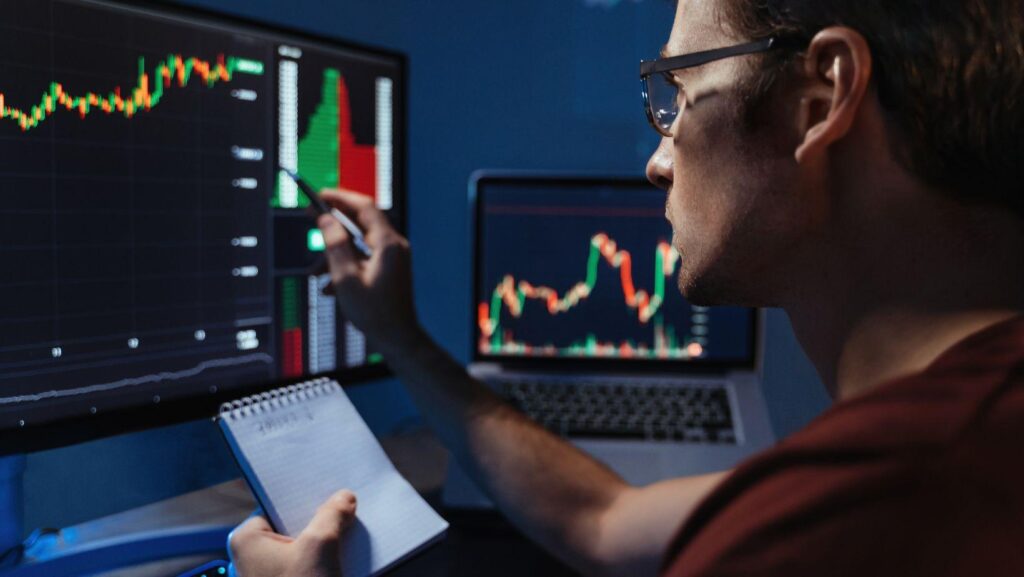
Crypto markets rarely move in one place at a time. A token can gain attention on one network while liquidity shifts somewhere else, wallet activity builds on another chain and DEX volume starts to change before the chart looks obvious.
That is why cross-chain data has become part of more careful market research. Traders who only watch one blockchain see part of the picture. The fuller signal is often in the movement between chains, where capital, liquidity and wallet behaviour start to show pressure before a clean price move appears.
Why single-chain monitoring misses part of the market
A single blockchain view gives useful detail, but it also creates blind spots. Liquidity does not stay fixed on Ethereum, Solana, Base, BSC, Arbitrum or Polygon. It moves with launches, incentives, gas conditions, yield opportunities and user attention. When that movement happens across several networks, one dashboard is rarely enough.
The problem is not only missing a transfer. It is missing context. A wallet moving funds from one chain to another may mean nothing on its own. A liquidity pool thinning on one network and volume building on another may also mean little in isolation. When those signals start to line up, the picture becomes more useful.
When wallet movement, DEX activity and pool depth need to be read together, crypto AI trading becomes a research workflow rather than a shortcut to certainty. The trader is not asking a model to predict the future from one chart. They are using AI to organise activity across several chains so unusual patterns are easier to inspect.
Cross-chain analysis works best when it keeps the trader close to the data. The AI layer should help sort, flag and summarise movement. It should not remove judgement, risk controls or the need to check whether a signal has real market depth behind it.
Liquidity movement can appear before the chart looks clear
Liquidity tells a story that price alone can hide. A token may still trade in a narrow range while pool depth changes, large wallets reposition or a new chain starts receiving attention. By the time the chart looks obvious, some of the earlier movement may already have happened.
Cross-chain liquidity data helps traders see where activity is building or fading. If liquidity leaves one pool and appears elsewhere, the reason still needs research. It might reflect a protocol change, a new incentive, a market maker adjustment or ordinary user movement. The value is not in assuming the answer. It is in seeing the change soon enough to ask better questions.
This matters in fast markets because crypto data is noisy. Volume spikes, wallet transfers and pool changes happen constantly. A good cross-chain workflow does not treat every anomaly as a trade signal. It groups related activity so the trader can separate routine movement from something worth watching.
Wallet behaviour needs context across networks
Large wallets attract attention, but wallet movement is easy to misread. A transfer to a different chain does not automatically mean accumulation, distribution or a coming price move. It may be treasury management, collateral movement, liquidity provision or a simple operational shift.
The pattern matters more than the single action. Several related wallets moving at the same time, repeated transfers into the same ecosystem or wallet activity paired with DEX volume gives more context than one large transfer. Cross-chain monitoring makes those relationships easier to see.
Manual tracking becomes difficult once the same token or connected wallets appear across several networks. A trader can watch block explorers, DEX pages and social feeds for a while, but that process becomes fragile when markets move quickly. A platform that brings wallet activity, pools and charts into one view reduces the amount of tab-switching and helps keep the research process more consistent.
How AI helps sort signal from noise
AI is useful in crypto research when it reduces the time spent sorting raw activity. It can group similar events, surface unusual changes and summarise movement that would otherwise sit across several tools. That is different from letting the tool make the trading decision.
Machine learning models need clean inputs and sensible limits. If delayed, incomplete or poorly labelled data enters the workflow, data quality shapes the output before the trader even reviews the signal.
A more practical use is pattern recognition. AI can help compare current wallet activity with previous periods, highlight abnormal pool movement or show when volume on one chain is out of line with the rest of the market. The trader still needs to ask what caused it, whether liquidity is deep enough and whether the risk fits the strategy.
This is especially important for smaller or volatile tokens. A dramatic change on a chart may come from thin liquidity rather than broad demand. AI can help draw attention to the event, but the interpretation still belongs to the person using the tool.
What a useful cross-chain workflow includes
A practical workflow starts with coverage. The trader needs visibility across the networks where the token, wallet or sector actually moves. Watching one chain closely while the activity has shifted elsewhere creates a false sense of control.
The next layer is timing. Live or near live data matters when the goal is to understand movement as it develops, because data latency can make short-term market reading weaker.
Alerts should focus on specific behaviours rather than vague movement. Large wallet transfers, pool depth changes, unusual DEX volume, repeated cross-chain flows and sudden changes in token activity should not all trigger the same kind of alert. A single alert rule for everything usually creates noise.
The final layer is a proper review. Every flagged event should be checked against liquidity, broader market conditions, wallet history and recent token news. Cross-chain data gives the trader a better starting point. It does not remove the need to verify the reason behind the signal.
Risk still sits at the centre of the process
Better data does not make crypto markets less volatile. It changes how quickly a trader sees movement and how much context they have when making a decision. That distinction matters.
A cross-chain signal can be early, but wrong. It can be accurate, but too small to matter. It can show real activity, but not enough liquidity for a safe entry or exit. Careful traders treat AI tools as research support, not as permission to take larger risks.
Risk management should stay outside the excitement of the signal. Position sizing, liquidity checks, stop rules, time horizon and exposure limits still decide whether a trade is controlled. Without those guardrails, faster information may only lead to faster mistakes.
AI trading tools are more useful when they slow down the right parts of the process and speed up the repetitive parts. They reduce manual scanning, but they should make the final review more careful, not less.
Why cross-chain intelligence is becoming normal crypto research
Crypto markets no longer sit neatly inside one network. Liquidity moves, wallet behaviour changes and attention shifts across chains before a chart always explains what happened. A single-chain view still helps, but it leaves gaps when the activity has already moved elsewhere.
Cross-chain data gives traders a better way to read those gaps. It does not turn every signal into a trade, and it does not remove risk. It gives the research process more context, which matters when several small movements start pointing in the same direction.
AI works best here when it keeps the process organised. It can reduce manual scanning, group unusual activity and make early patterns easier to review. The decision still needs human judgement, liquidity checks and risk control. Used that way, AI becomes part of a sharper research workflow, not a replacement for one.
©UK Linkology LTD
www.uklinkology.co.uk