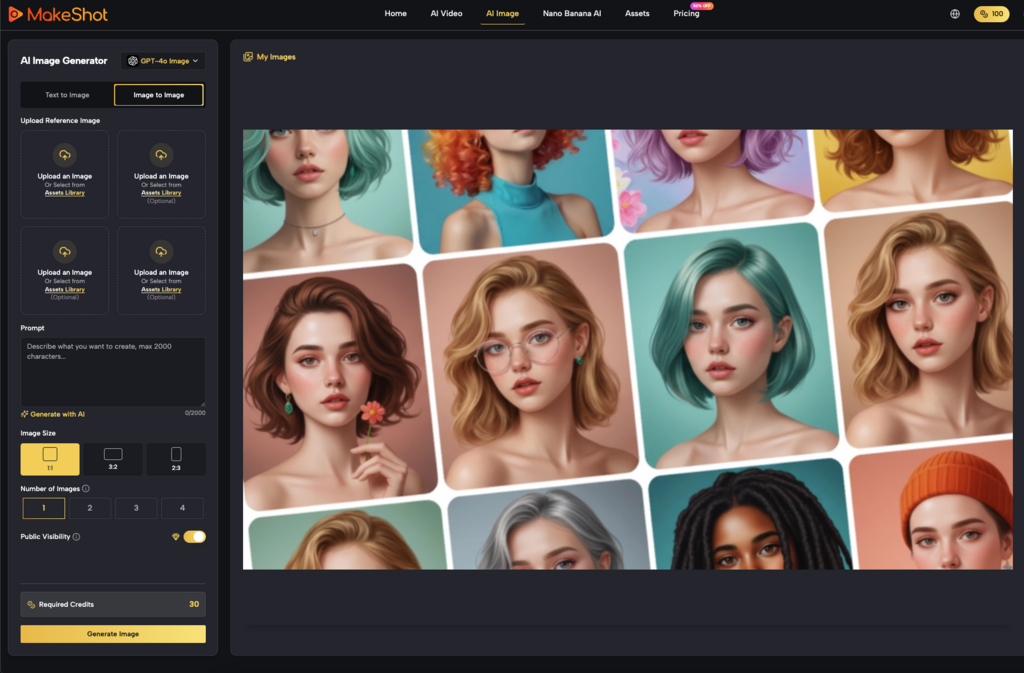
Content teams today face a specific type of creative exhaustion. The demand for visual assets across social platforms, display networks, and landing pages has reached a volume that traditional production cycles can rarely sustain. When every ad set requires ten variations and every landing page needs a hero image that speaks to a different audience segment, the bottleneck is no longer just the budget—it is the time required for ideation and execution.
The introduction of generative tools into the marketing stack has promised to alleviate this pressure, yet the results have often been inconsistent. Early adopters found themselves spending more time correcting AI hallucinations than they would have spent in a photoshoot. However, the landscape is shifting toward more modular, controllable workflows. Tools within the Banana AI ecosystem represent this evolution, moving away from simple “text-to-image” novelty toward functional asset production that respects the constraints of professional design.
The Shift Toward Modular Asset Creation
In a traditional workflow, a campaign visual is a static destination. You brief it, shoot it, and publish it. If the performance data suggests the background color is off or the framing doesn’t work for mobile, you are stuck. Generative systems change this by making every component of a visual an editable variable.
Using Nano Banana AI allows a team to move from a “one-and-done” mindset to a “versioned-at-scale” approach. This is particularly useful for landing-page support where the visual must align perfectly with the copy. If the copy is about “streamlined logistics,” the image can be generated to reflect that specific mood, lighting, and composition without scouring stock libraries for hours only to find an image that looks “close enough.”
Beyond the Hero Image
While the hero image is the obvious use case, the real value lies in the secondary assets. These are the product feature visuals, the blog post headers, and the background textures for typography. By leveraging Banana AI, creators can maintain a consistent aesthetic across these minor assets.
One practical judgment here: consistency is not automatic. Even with advanced models, achieving a perfect stylistic match across ten different prompts requires a disciplined approach to seed management and prompt structuring. Teams cannot expect the tool to “know” their brand identity without significant manual guidance and iterative testing.
Integrating Kinetic Assets into Social Strategy
The move from static images to video is often where marketing budgets break. High-quality motion content has historically required specialized editors and expensive software. However, the rise of the AI Video Generator has lowered the barrier to entry for motion experiments.
For a content team testing generative media workflows, the goal isn’t necessarily to replace a 30-second cinematic commercial. Instead, the focus is on the “kinetic middle”—the 6-second social ads, the animated background loops for websites, and the short-form transitions that keep users engaged. These assets are often too small to justify a full production budget but too important to ignore.
Navigating Temporal Consistency
It is important to reset expectations regarding AI-generated video. While static images have reached a point of high fidelity, video still struggles with temporal consistency—the ability of an object to remain unchanged from frame to frame. A character’s shirt might change color slightly, or the background might warp during a pan.
Creators must learn to work with these limitations rather than against them. Using video tools for abstract textures, environmental pans, or simple object motions often yields better results for campaign assets than trying to generate complex human interactions. The “uncanny valley” remains a significant hurdle; for many brands, it is safer to use AI for high-concept backgrounds while keeping human subjects in the realm of traditional photography or very subtle AI enhancement.
Refining the Workflow: From Prompt to Production
The effectiveness of Nano Banana AI in a professional setting depends on how it is integrated into existing design software. Most successful teams do not use generative tools in a vacuum. Instead, they use them to generate the raw material which is then finished in tools like Photoshop or After Effects.
For example, a marketer might use Banana AI to generate a specific architectural background that would be impossible to photograph. They then take that output and layer in their actual product photography. This hybrid approach ensures that the “truth” of the product is maintained while the creative environment around it is enhanced by generative capabilities.
Addressing Technical Limitations and Hallucinations
A visible caution is necessary when discussing the current state of these tools. One of the most persistent issues remains the rendering of complex text within images. While Nano Banana AI has made strides in improving in-image text, it is still not 100% reliable for long strings of copy or specific brand fonts.
Another limitation is the “black box” nature of certain generative processes. Sometimes a prompt that worked yesterday produces a slightly different result today due to underlying model updates or random noise seeds. For teams that require pixel-perfect precision for enterprise-level branding, this unpredictability can be a point of friction.
The Iteration Tax
There is also the “iteration tax.” While generating an image takes seconds, generating the right image can take dozens of attempts. Content teams need to factor this into their timelines. AI does not eliminate the “work” of creative production; it shifts the work from manual labor to curation and prompt refinement. If a team expects a one-click solution, they will likely be disappointed by the lack of nuance in the initial outputs.
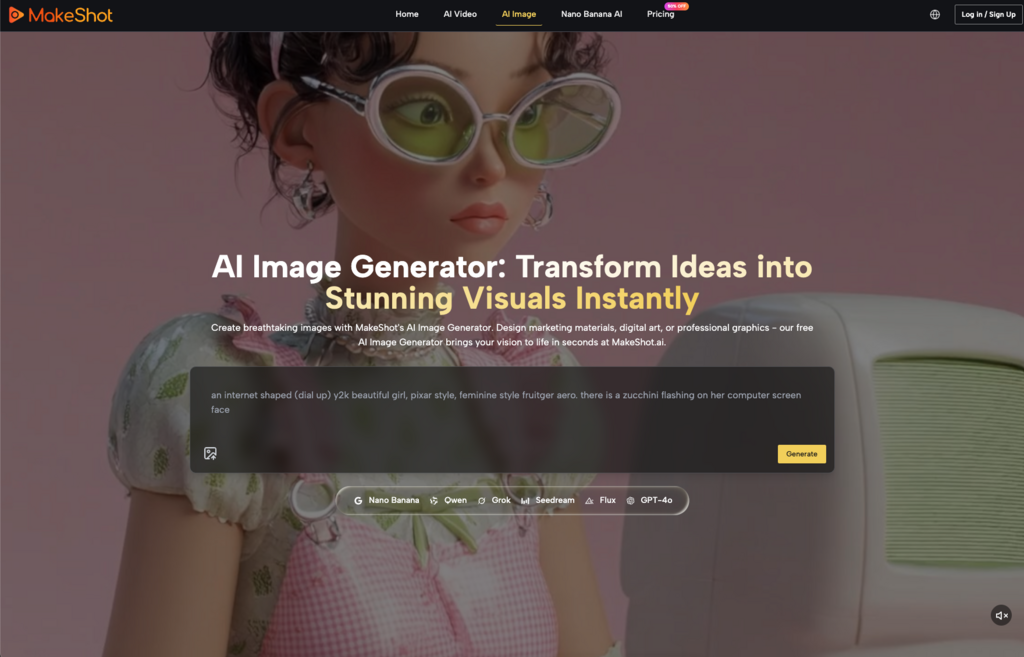
Practical Applications in Performance Marketing
Performance marketers benefit most from the speed of these tools. In ad testing, the “winning” creative is often a surprise. By using an AI Video Generator to quickly pivot between different visual metaphors, a team can run 20 variations of an ad for the cost and time it used to take to produce two.
Testing Visual Hypotheses
If a team believes that “minimalist office spaces” will convert better than “vibrant outdoor scenes” for their SaaS product, they can test this hypothesis in an afternoon. They can use Banana AI to generate both environments, overlay their UI mockups, and get the ads live. This level of agility was previously reserved for companies with massive internal creative departments.
The Role of Human Judgment in an Automated Stack
The shift toward tools like Nano Banana AI doesn’t diminish the role of the designer; it elevates them to an art director. The tool handles the “brushstrokes,” but the human must still handle the “vision.” This involves making critical decisions about composition, color theory, and emotional resonance—things that AI can mimic but not truly understand.
One area of uncertainty is the long-term copyright and provenance of AI-generated assets in a commercial context. While platforms are providing more robust legal frameworks, teams should still exercise caution and stay informed about the evolving regulations in their specific regions. Grounded reasoning suggests that for high-stakes campaign assets, having a human designer vet and “touch up” every AI output is not just a stylistic choice, but a risk-management one.
Conclusion: Building a Resilient Creative Pipeline
Rethinking campaign assets isn’t about replacing humans with machines; it’s about building a pipeline that can handle the modern volume of digital consumption. By strategically using Nano Banana AI for high-fidelity stills and the AI Video Generator for engagement-focused motion, content teams can move away from the “asset famine” that plagues many marketing departments.
The future of content creation lies in this modularity. When images and videos are no longer static, expensive, and time-consuming to produce, the focus returns to what actually matters: the strategy, the story, and the connection with the audience. The tools are ready to provide the canvas; it is up to the creators to decide what to paint.